
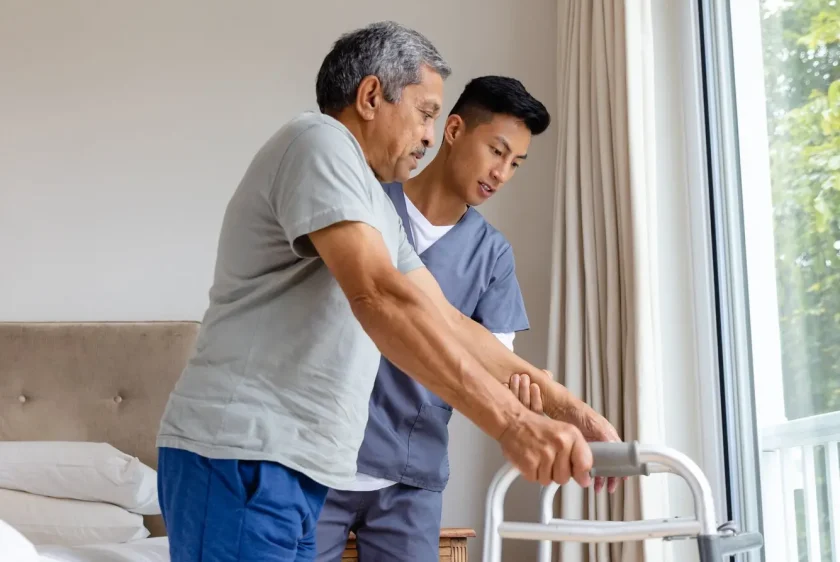
Ensuring Safety for Elderly Residents in Your Home
Many families worry about elderly safety at home after a loved one falls or faces an accident. About one in three people over 65 falls each year, making fall prevention a top priority.
This post outlines simple steps to reduce home hazards and utilise mobility aids to create a comfortable environment for your elderly family members. Discover how simple adjustments can enhance your home’s safety now.
Key Takeaways
- Approximately one in three people over 65 falls each year, making fall prevention a crucial concern at home.
- Remove trip hazards, such as clutter and loose carpets, to reduce the risk of falls for elderly residents.
- Install safety features such as grab rails in bathrooms, ramps for easy access, and handrails on stairs for better support.
- Test smoke and fire alarms monthly, change batteries annually, and educate seniors on the meaning of alarm sounds to enhance emergency safety and response.
- Utilise specialised equipment, such as walkers and voice-activated technology, to enhance independence while ensuring the safety of elderly family members at home.
Identifying and Preventing Hazards
Identifying hazards in your home is crucial for the safety of elderly residents. Simple actions can significantly reduce risks, ensuring a safer living environment for everyone.
Removing trip hazards
Ensuring the safety of elderly residents in your home is crucial. Removing trip hazards can significantly reduce the risk of falls.
- Clear clutter from floors to allow safe movement. Shoes, bags, and other items often create obstacles.
- Ensure that electrical cords are kept flat against the walls. Cords that dangle or cross walkways pose a serious risk.
- Use non-slip mats in areas prone to moisture, such as kitchens and bathrooms, to prevent slips and falls. Slippery surfaces can lead to dangerous slips.
- Secure area rugs with double-sided tape or remove them entirely. Loose rugs are common trip hazards.
- Maintain clear pathways both inside and outside the house. This allows easy access and improves overall mobility.
- Fix loose tiles or floorboards promptly; they can trip you unexpectedly and cause falls.
- Keep stairs well-lit and free of objects; this enhances visibility and safety while navigating between levels.
- Install grab rails near steps, in bathrooms, or anywhere support is needed frequently; they provide stability during movement.
- Encourage the use of mobility aids, such as walking frames, if necessary; these devices help maintain balance while walking around the home.
- Regularly assess your home for new hazards as conditions change over time; ongoing maintenance ensures continued safety.
Implementing these recommendations can create a safer environment for elderly residents while promoting comfort enhancements at home.
Fixing carpets firmly
Removing trip hazards helps create a safer environment. Fixing carpets firmly is another essential step in ensuring the safety of elderly residents in your home. Loose carpets can easily cause falls, leading to serious injuries.
Secure any loose ends with double-sided tape or carpet grips. This simple fix keeps the carpet in place and reduces the risk of tripping.
Consider using non-slip mats under rugs to enhance stability as well. Regularly inspect all walkways and rooms for signs of wear and tear on the carpets. An effective home assessment will identify any areas needing attention.
Prioritising these modifications improves accessibility and gives peace of mind to family members caring for elderly loved ones.
Good lighting
Fixing carpets firmly leads to another crucial concern: good lighting. Proper lighting reduces the risk of falls and increases safety in your home. Bright, even lights help elderly residents see clearly.
Place lamps in dark areas such as hallways and staircases. Use LED bulbs for better visibility.
Consider installing motion-sensor lights for convenience. These turn on automatically when someone enters a room or space. Enhancing overall lighting improves accessibility, enabling easier movement throughout the house.
Ensure that all light switches are easily reachable, which supports fall prevention efforts and promotes comfort enhancements for seniors.
Grab rails in bathrooms
Grab rails in bathrooms provide essential support for elderly residents. These safety equipment features help prevent slips and falls, especially when getting in and out of the shower or bath.
Installing grab rails near toilets and sinks enhances comfort and accessibility.
Choose sturdy materials that can withstand weight. Ensure proper installation to avoid accidents. Regularly check these supports for wear and tear to maintain safety standards. Grab rails not only contribute to fall prevention but also promote independence in daily tasks for elderly individuals living at home.
Eliminating slippery surfaces
Slippery surfaces can lead to serious falls for elderly residents. Use non-slip mats in the bathroom and kitchen to prevent slips and falls. Ensure that floors are dry and clear of spills. You can also apply slip-resistant coatings on tiles or wood floors to improve safety.
Regularly check outdoor paths for moss or ice during the winter months. Proper drainage will also help reduce slippery spots outside. Poor visibility contributes to accidents, so ensure good lighting is available around all entryways and pathways as well.
These measures prevent slips both inside and outside the home, promoting a safer overall environment. Next, consider making necessary home modifications to support mobility needs effectively.
Making Necessary Home Modifications
Making necessary home modifications can significantly enhance the safety of elderly residents. Simple changes, such as installing ramps and handrails, offer valuable support in daily activities.
Installing handrails and ramps
Handrails and ramps provide vital support for elderly residents. These modifications enhance safety and accessibility in your home.
- Handrails offer stability on stairs, hallways, and bathrooms. They help prevent falls and promote confidence when moving around the house.
- Ramps make entering and exiting the home easier. They accommodate walkers and wheelchairs, improving mobility for those who need assistance.
- Install handrails at a height that suits the user. This makes gripping easier and provides better support while walking.
- Choose non-slip materials for ramp surfaces. Such materials reduce the risk of slips, especially during wet conditions.
- Ensure ramps have gradual slopes for easy navigation. Steep slopes can be particularly challenging for elderly residents who use mobility aids.
- Position handrails along both sides of wide staircases. This adds security for users who may require assistance from either side.
- Maintain clear paths around ramps and handrails to ensure safe navigation. Clutter-free areas help elderly individuals move without obstacles or hazards.
- Regularly check the integrity of handrails and ramps. Prompt repairs keep these safety features reliable over time.
- Involve family members in evaluating the installation process. Their support can help enhance the comfort levels of elderly residents in your home.
Utilising specialist equipment
Utilising specialist equipment can significantly improve safety for elderly residents. Grab bars provide support in bathrooms and help prevent falls from occurring. Walking aids, such as canes or walkers, enhance mobility and confidence.
These tools make it easier for seniors to move around their homes safely.
Installing raised toilet seats enhances comfort and accessibility. Shower chairs provide a safe seating option while bathing. Bed rails assist with getting in and out of bed without strain. Smoke alarms tailored for those with hearing impairments ensure everyone remains alert during emergencies.
Each piece of equipment plays a crucial role in creating a safer living environment for elderly individuals at home.
Keeping important items within reach
Keep essential items within easy reach to help elderly residents stay safe and comfortable. Store frequently used items in lower cabinets or on shelves that they can access without stretching.
Avoid placing important objects too high. This change reduces the chance of falls and injuries.
Consider using an organised system for personal care products, medications, and kitchen utensils. Label drawers clearly so everything is easy to find. Enhancing accessibility improves their independence while ensuring safety at home.
Ensuring smoke and fire alarms are working
Smoke and fire alarms save lives. Ensure these devices work properly in your home by testing alarms regularly, at least once a month. Change the batteries at least once a year to keep them functioning well.
Install smoke alarms on every level of your home, especially near bedrooms and other sleeping areas.
Educate elderly residents about alarm sounds. They need to recognise what each sound means. Involve family members when preparing for emergencies involving fires or smoke alerts. These steps provide security measures that enhance safety for elderly residents in your home.
Preparing for emergencies
Prepare for emergencies to keep elderly residents safe and secure. A well-thought-out plan can save lives.
- Develop a clear emergency plan that includes designated evacuation routes and detailed safety procedures.
- Conduct regular fire drills to ensure that everyone knows how to respond effectively.
- Keep a list of emergency contacts nearby the phone or in a readily accessible location.
- Store essential supplies, such as water, food, and medications, in an emergency kit.
- Ensure all smoke alarms function properly and change batteries regularly.
- Teach elderly residents how to use mobile phones for quick access to help.
- Discuss potential scams with them and provide tips on how to avoid falling victim to them.
- Involve family members in your emergency preparedness discussions for additional support.
- Assess security measures at home, including locks on doors and windows, to enhance safety.
- Regularly review the emergency plan to ensure it remains current with changing needs.
These steps will ensure the safety of elderly residents during emergencies while enhancing their overall comfort and security at home.
Involving family members
Preparing for emergencies can be easier with the support of family. Family members play a crucial role in ensuring safety for elderly residents at home. They can help assess hazards and suggest necessary modifications to improve accessibility.
Encourage them to participate in discussions about care plans and safety measures. Assign specific tasks, like checking smoke alarms or organising emergency contacts.
Involving family also creates a strong support system. It fosters communication about daily needs and concerns. Regular visits from relatives provide companionship, which enhances comfort and well-being.
This involvement not only reassures the elderly but also strengthens family bonds.
Improving accessibility with voice-activated technology
Voice-activated technology greatly enhances accessibility for elderly residents. This technology allows them to control devices with simple voice commands. These features can include lights, thermostats, and even televisions.
They eliminate the need for complicated remotes or switches.
Using voice-activated systems promotes independence and safety, allowing elderly residents to call for help without having to move from their location. Such innovations also play a crucial role in emergency preparedness.
Ensuring that smoke and fire alarms are also linked with these systems improves security measures at home. Overall, voice-activated technology simplifies daily tasks for seniors while providing peace of mind to caregivers and family members.


