
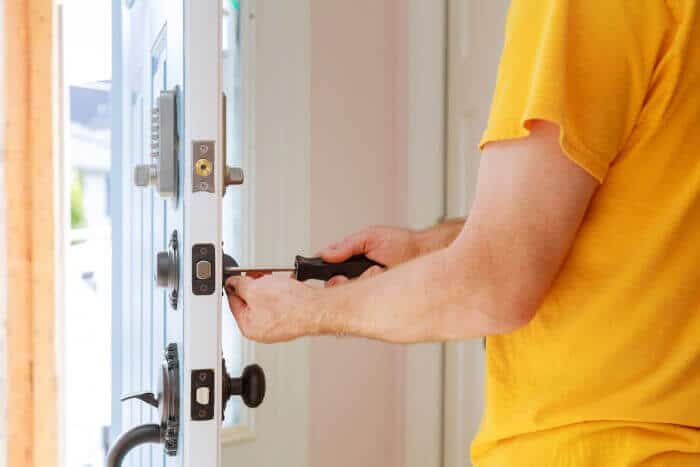
How to Reinforce Your Doors for Enhanced Home Security
Many people worry about weak doors making their homes targets for break-ins. Most home burglaries occur by forcing entry points, such as doors. This guide shows you how to enhance your home security with door reinforcement and security upgrades in simple steps.
Discover easy ways to enhance your security with strong locks, improved hardware, and additional safety features below.
Key Takeaways
- Most burglaries happen by forcing open weak doors; upgrading locks and hardware is vital.
- Install deadbolts (preferably ANSI Grade 1 or 2) with at least a one-inch throw for strong resistance against break-ins.
- Use long screws (at least three inches) in strike plates and hinges to anchor them deep into the door frame for added strength.
- Add security film or laminated glass to glass panels; these materials stop easy shattering and help keep intruders out.
- Security bars, door reinforcement locks, and regular checks of all fittings further increase protection from forced entry.
Upgrading Locks and Hardware
Upgrade your locks and hardware to strengthen your home’s security. Install deadbolts and choose longer screws for added durability on strike plates and hinges.
Install a deadbolt
A deadbolt adds a significant layer of security to your door. It enhances home safety and prevents unauthorised access.
- A single-cylinder deadbolt features a keyhole on one side and a knob on the other, allowing for easy use from the inside.
- A double-cylinder deadbolt offers added security since it requires a key for entry and exit; it works well on doors with glass panels nearby.
- Choose a grade 1 or grade 2 deadbolt, as these offer superior resistance against break-ins; higher grades signify better security performance.
- Ensure the deadbolt extends at least one inch into the door frame; this depth provides maximum strength against attempted forced entry.
- Opt for a deadbolt made of solid material, such as steel or brass, as these options are more durable than plastic versions; strong materials resist wear and tear over time.
- Installing the deadbolt high on the door can help deter intruders who try to tamper with locks; placing it around 40 inches above ground level strikes an ideal balance between accessibility and protection.
After installing a deadbolt, focus on reinforcing the door further with other effective methods.
Use longer screws for strike plate and hinges
Longer screws significantly enhance the security of your doors. They fortify both the strike plate and hinges, making it harder for intruders to breach your home.
- Standard screws often fail to provide adequate strength; replacing them with longer screws boosts durability.
- Longer screws penetrate deeper into the door frame, offering better resistance against forced entry.
- They help secure the strike plate firmly, reducing vulnerability during a break-in attempt.
- Investing in longer screws can deter burglars who rely on quick access through weak hardware.
- Using these improved fasteners tightens the connection between the door and its frame, promoting overall door reinforcement.
Strengthening your door with longer screws increases safety features. Upgrading locks and hardware should follow this crucial step.
Consider adding security film or laminated glass for glass panels
Security film and laminated glass significantly enhance the security of your home. These materials prevent easy access through windows or glass doors. Security film adheres to the surface of glass panels, making them more resistant to breakage.
Thieves often abandon their attempts when faced with reinforced barriers.
Laminated glass consists of two sheets of glass with a layer of plastic sandwiched between them. This construction holds the pieces together even if shattered. It offers excellent protection against break-ins while adding safety features for your family.
By choosing these options, you enhance door security and effectively bolster overall home security.
Use a security door bar or reinforcement lock
Security door bars and reinforcement locks provide an extra layer of protection for your home. These hardware options enhance home security by making it harder for intruders to access entryways.
- A security door bar reinforces the door against forced entry. It acts as a physical barrier, preventing the door from being pushed open.
- Reinforcement locks enhance locking systems by providing multiple points of contact. They secure doors better than standard locks, making them less vulnerable to tampering.
- These devices fit easily over most doors, adding strength without complex installation. Homeowners can quickly implement these measures to boost their property’s safety features.
- Security door bars often adjust to different widths, ensuring a custom fit for various entryways. This versatility makes them suitable for both standard and non-standard doors.
- The addition of these devices effectively complements other security measures, such as deadbolts and strike plates. Together, they create a comprehensive approach to burglary prevention.
- Many models offer easy removal for added convenience while maintaining access control when needed. This flexibility enables homeowners to strike a balance between security and usability.
Utilising a security door bar or reinforcement lock can significantly strengthen your home’s entryway protection. These solutions play a vital role in preventing vulnerabilities and ensuring the overall safety of residential properties.
Reinforcing the Door
Reinforce your door by upgrading to a heavy-duty deadbolt and installing a strong strike plate. Secure the hinges with long screws for added protection. Consider adding extra security features, such as bars or films, to vulnerable areas.
Take these steps seriously to strengthen your entryway against intrusions. Discover additional ways to enhance your home security through effective reinforcement techniques.
Upgrade the deadbolt
Upgrading the deadbolt is a crucial step in enhancing home security. A strong deadbolt provides an effective barrier against intruders.
- Choose a high-quality deadbolt that meets industry standards for strength and durability. Look for models with a rating of at least ANSI Grade 1.
- Ensure the deadbolt has a one-inch throw to secure the door properly when locked. This feature prevents attackers from easily manipulating it.
- Select a single-cylinder deadbolt for ease of use or consider a double-cylinder model if your door has glass panels nearby. Double cylinders offer added protection, but they require keys on both sides of the lock.
- Install the deadbolt at a height between 36 and 48 inches from the ground for convenience. This positioning allows easy access while deterring trespassers.
- Use long screws to secure the mounting plate to the door frame and wall studs. Longer screws provide better support and prevent kick-in attacks.
- Test the lock regularly to ensure it operates smoothly without sticking or jamming. Regular maintenance ensures reliable performance when you need it most.
- Consider electronic deadbolts that offer keyless entry options, providing added convenience and security features such as remote locking capabilities.
- Replace any old or damaged locks immediately to maintain secure access control at your home entrance and keep potential vulnerabilities at bay.
Upgrading your deadbolt significantly boosts overall home security, making entryway protection more effective against unwanted visitors.
Install a heavy-duty strike plate
A heavy-duty strike plate adds strength to your door frame. This simple upgrade significantly improves home security.
- Start by removing the existing strike plate from the door frame.
- Choose a heavy-duty strike plate made of steel or reinforced material. Such materials resist tampering.
- Mark the location for the new plate, ensuring it aligns properly with the deadbolt.
- Use longer screws to secure the new strike plate, as they provide better reinforcement.
- Install it at least three inches into the framing for increased stability.
- This adjustment creates a stronger barrier against forced entry.
- Test the deadbolt after installation to ensure proper alignment and function.
- A sturdy strike plate enhances vulnerability prevention, making your home safer.
Secure hinges with long screws
Hinges play a crucial role in door security. Secure hinges effectively to prevent unwanted entry.
- Use long screws to anchor the hinges deeper into the door frame. This makes it much harder for intruders to pry open the door.
- Select screws that are at least three inches in length. These screws will provide stronger support and enhance vulnerability prevention.
- Ensure the screw heads sit flush against the hinge. Doing this prevents easy access for anyone trying to tamper with them.
- Choose heavy-duty screws designed for exterior doors. These types of screws resist rust and corrosion, which can weaken their strength over time.
- Regularly check your hinges for any signs of wear or damage. Keeping hinges in good condition enhances overall home security.
Properly reinforcing your door with secure hinges provides better overall protection. Upgrading locks and hardware will further enhance your home security strategy.
Consider additional measures such as security bars and films
Security bars and security films offer an additional layer of protection for your doors. These measures help to deter break-ins and enhance home security.
- Security bars offer a physical barrier against intruders. They fit over windows and doors, making forced entry difficult. Homeowners can choose from removable or permanent options, depending on their specific needs.
- Security films strengthen glass panels. This film adheres to the glass surface, preventing shattering from impacts or attempts to break in. Many types are available, including tinted or clear options that provide both safety and aesthetic benefits.
- Reinforcement locks provide an additional layer of security. These locks work with existing door hardware to prevent unauthorised access. They act as a secondary locking mechanism.
- Multipoint locking systems secure multiple points along the door frame. This feature enhances overall strength and reduces vulnerability at weak points.
- Surveillance systems monitor your property continuously. Cameras positioned near entryways can deter criminal activity while providing evidence if needed. The presence of cameras may discourage would-be intruders from attempting a break-in.
- Installing heavy-duty strike plates protects your door’s hinges and frame better than standard models do. The enhanced durability makes it harder for attackers to force the door open.
- Using longer screws in hinges strengthens door attachment to the frame significantly more than shorter screws do, making it resistant to forced removal.
- Security door bars function similarly to security gates, providing additional resistance against forced entry at ground-level doors.
Implementing these strategies creates more robust entryway protection for your home while reducing vulnerability factors associated with traditional locking systems.


